Eye Exams That Support Visual Development
Pediatric Care in Bennington for early detection of visual acuity, alignment, and focusing problems
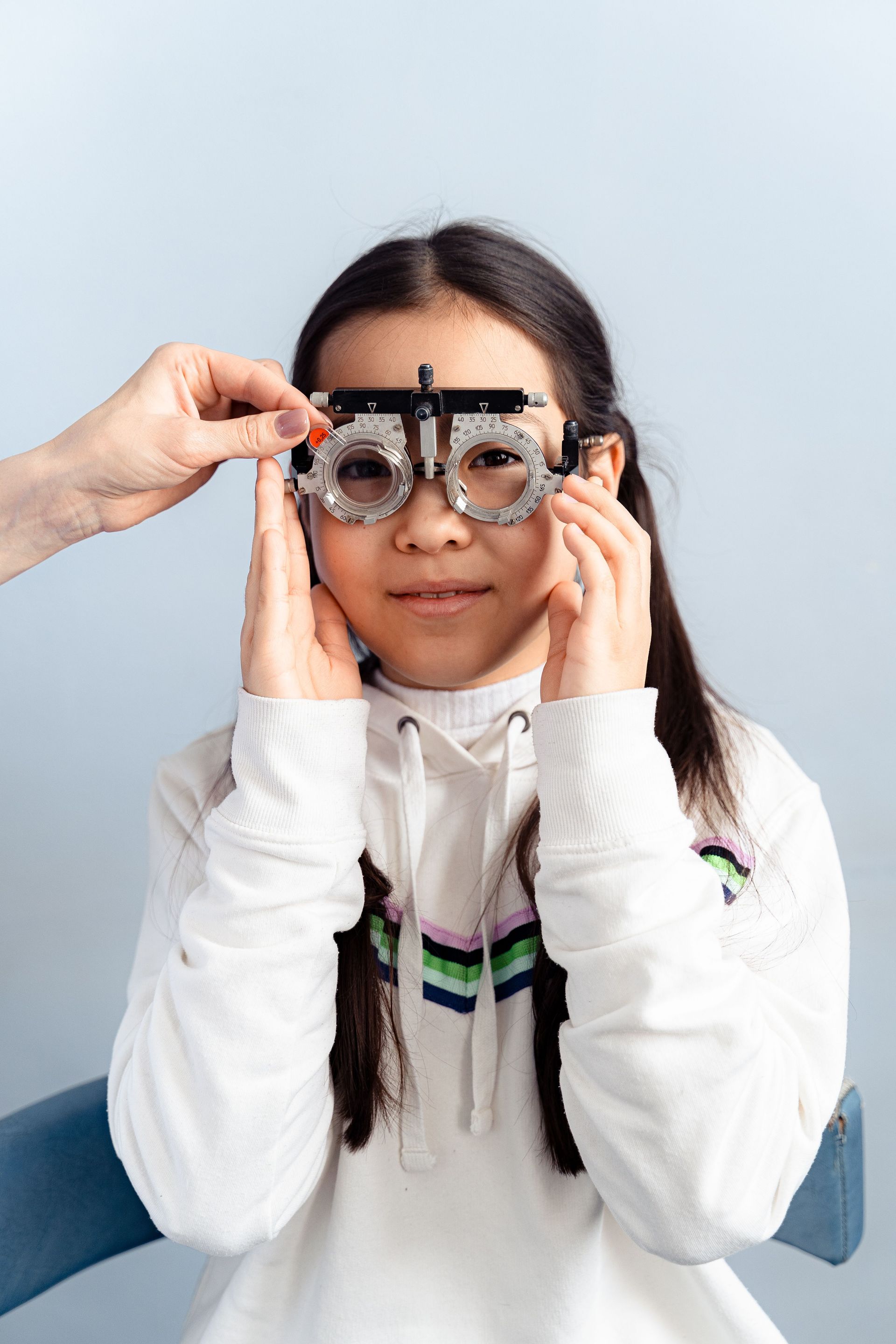
Children's eyes develop rapidly from infancy through adolescence, and undetected vision problems during this period can interfere with learning, coordination, and social development. Advanced Eyecare evaluates visual acuity, eye alignment, focusing ability, and refractive errors using age-appropriate methods that differ from adult testing. Infants may be assessed with fixation and following tasks, preschoolers with picture charts, and school-age children with letter-based acuity tests and near-point measurements.
Pediatric eye exams screen for amblyopia, strabismus, hyperopia, myopia, and astigmatism before these conditions affect classroom performance or depth perception. A child who struggles to read the board, complains of headaches after homework, or covers one eye while reading may have an uncorrected refractive error or binocular vision dysfunction. Early intervention allows the visual system to develop normally, while delays can result in permanent reductions in best-corrected acuity or stereopsis.
Schedule a pediatric eye exam when you notice vision-related concerns or before your child enters school.
Why Early Evaluation Matters for Children
Screening during early childhood identifies conditions that may not produce obvious symptoms but still impair visual development. Strabismus, where the eyes do not align properly, can lead to amblyopia if the brain begins suppressing input from the misaligned eye. Hyperopia in young children may cause accommodative esotropia, where the effort to focus triggers inward eye turns. Detecting these issues before age seven—when the visual cortex is most adaptable—improves the likelihood of successful treatment.
After the exam, parents receive a clear explanation of findings, whether corrective lenses are needed, and if follow-up care such as patching or vision therapy is recommended. Children prescribed glasses notice sharper chalkboard visibility, easier reading fluency, and reduced eye strain during homework. Those with alignment issues benefit from early optical correction or referral for further evaluation, preventing permanent vision loss in the weaker eye.
Exam frequency depends on findings and risk factors. Children with a family history of high refractive error, premature birth, or developmental delays may require more frequent monitoring. Routine exams typically occur at six months, age three, before kindergarten, and every one to two years thereafter unless symptoms arise between visits.
What Parents Want to Know About Pediatric Eye Care
Parents often have questions about when exams are necessary, what the process involves, and how vision problems are detected in young children.
How can you test a child's vision if they cannot read letters yet?
Providers use age-appropriate methods such as Teller Acuity Cards for infants, LEA symbols or tumbling E charts for preschoolers, and fixation preference tests to detect differences in visual function between the two eyes.
What signs suggest my child might have a vision problem?
Squinting, sitting very close to screens, frequent eye rubbing, head tilting, covering one eye, losing place while reading, or avoiding activities that require sustained near focus can all indicate refractive error, alignment issues, or focusing difficulties.
When should my child have their first eye exam?
The American Optometric Association recommends an initial exam at six months, a second exam at age three, and a third before entering first grade. Children in Southern Vermont, the Berkshires, and Eastern New York can receive these screenings at Advanced Eyecare locations.
Will my child need glasses if they have a small refractive error?
The decision depends on the degree of error, whether it affects both eyes equally, and if symptoms are present. Low hyperopia may not require correction if the child focuses comfortably, while even mild myopia may benefit from glasses if it interferes with seeing the board at school.
What happens if the exam reveals amblyopia or strabismus?
Treatment may include prescription glasses, patching the stronger eye to stimulate the weaker one, or referral to a pediatric ophthalmologist for further evaluation. Early intervention during the critical period of visual development improves outcomes significantly.
Advanced Eyecare offers pediatric eye exams at our Bennington, Manchester Center, and North Adams offices, providing families with convenient access to vision screening and early detection services tailored to children's developmental stages.